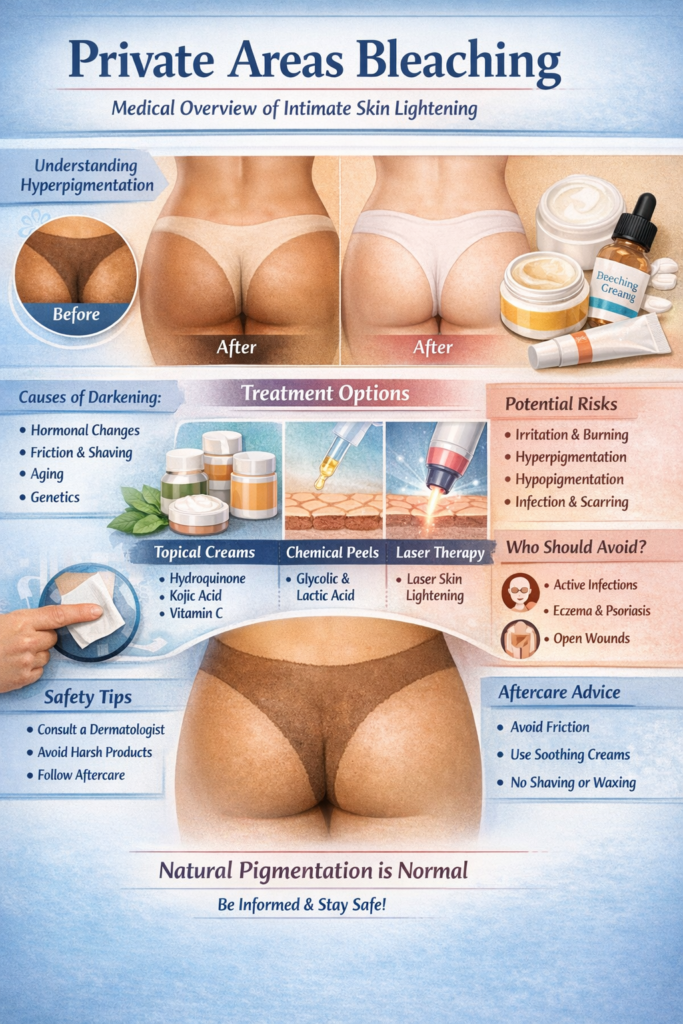
Private Areas Bleaching
Private Areas Bleaching cost £600.
Private area bleaching, also known as intimate skin lightening, is a cosmetic dermatological procedure aimed at reducing hyperpigmentation in sensitive areas of the body. Although often discussed in beauty contexts, it is important to approach this topic from a medical and safety-oriented perspective.
This article provides a clinical overview of causes, procedures, risks, benefits, and safety considerations surrounding intimate skin bleaching.
Understanding Hyperpigmentation in Intimate Areas
Hyperpigmentation refers to the darkening of skin due to increased melanin production. In private areas—such as the bikini line, inner thighs, perianal region, and external genital area—darker skin tone is extremely common and medically normal.
Common Causes of Darkening
Hormonal changes – Pregnancy, puberty, and hormonal disorders.
Friction – Tight clothing, shaving, waxing, and skin rubbing.
Aging – Natural pigmentation changes over time.
Inflammation or irritation – Post-inflammatory hyperpigmentation.
Genetics – Natural variation in melanin distribution.
It is important to emphasize: darker intimate skin is not a medical problem unless associated with symptoms such as itching, pain, thickening, or sudden discoloration.
What Is Private Area Bleaching?
Private area bleaching involves the use of topical agents, chemical peels, or laser treatments to reduce melanin concentration and lighten skin tone.
The procedure is purely cosmetic and does not improve medical health. It should always be performed or supervised by a licensed medical professional, preferably a dermatologist.
Treatment Options
1. Topical Lightening Agents
Prescription or medical-grade creams may contain:
Hydroquinone (short-term use only under supervision)
Kojic acid
Azelaic acid
Vitamin C
Niacinamide
Retinoids
Medical Note: Over-the-counter bleaching creams may contain harmful substances such as mercury or high-dose steroids, which can cause serious skin damage.
2. Chemical Peels
Mild chemical peels using low concentrations of:
Glycolic acid
Lactic acid
Mandelic acid
These help exfoliate the top layer of pigmented skin. Because intimate areas are highly sensitive, only specially formulated peels should be used.
3. Laser Treatments
Laser therapy targets melanin pigment directly. This method should only be performed in medical clinics with appropriate expertise.
Multiple sessions are typically required, and post-procedure care is critical to prevent complications.
Potential Risks and Side Effects
Private areas have thinner, more sensitive skin and higher moisture levels, increasing the risk of complications.
Possible side effects include:
Skin irritation
Burning sensation
Post-inflammatory hyperpigmentation
Hypopigmentation (excessive lightening)
Infection
Scarring (rare but possible)
Improper use of bleaching agents—especially non-medical products—can result in long-term skin damage.
Who Should Avoid Intimate Bleaching?
This procedure may not be appropriate for individuals with:
Active infections (fungal, bacterial, viral)
Eczema or psoriasis in the area
Open wounds
Very sensitive or reactive skin
History of keloid scarring
Pregnant or breastfeeding individuals should consult a healthcare provider before considering treatment.
Psychological and Social Considerations
Many people seek intimate bleaching due to aesthetic preferences, cultural influences, or social media trends. It is important to ensure that the decision is personal and not based on unrealistic beauty standards.
Medical professionals should provide counseling that reinforces:
Natural pigmentation is normal.
There is no “ideal” color for intimate skin.
Cosmetic procedures should be elective and well-informed.
Safety Guidelines
If considering private area bleaching:
Consult a board-certified dermatologist.
Avoid unregulated online products.
Do not use high-concentration hydroquinone without supervision.
Follow strict post-treatment care instructions.
Stop treatment immediately if irritation occurs.
Aftercare Recommendations
Proper aftercare reduces complications and improves results:
Avoid friction and tight clothing.
Use gentle, fragrance-free cleansers.
Apply prescribed soothing creams.
Avoid sun exposure (for exposed areas like bikini line).
Avoid shaving or waxing during healing.
Expected Results
Results vary depending on:
Baseline pigmentation
Skin type
Treatment method
Adherence to aftercare
Gradual lightening over weeks to months is typical. Permanent results are not guaranteed, especially if underlying causes (hormones, friction) persist.
Final Thoughts
Private area bleaching is a cosmetic choice rather than a medical necessity. While modern dermatology offers safer methods than in the past, the procedure still carries risks—especially when performed without medical supervision.
The most important takeaway: intimate skin pigmentation is normal, healthy, and varies widely among individuals. Any decision to pursue cosmetic lightening should prioritize safety, informed consent, and realistic expectations.