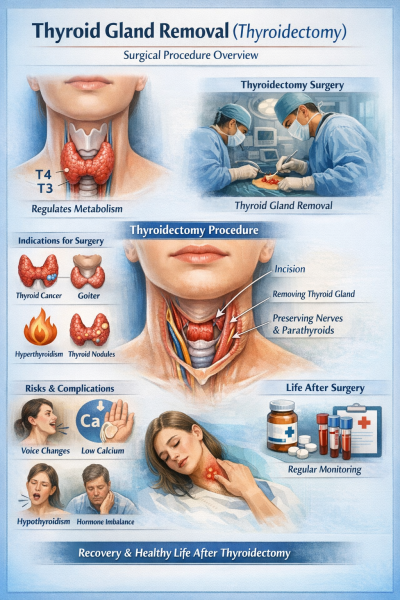
Thyroid Gland Removal (Thyroidectomy)
Thyroid Gland Removal (Thyroidectomy) cost £1550.
Thyroid gland removal, medically known as thyroidectomy, is a surgical procedure performed to remove part or all of the thyroid gland. The thyroid is a small, butterfly-shaped gland located at the front of the neck, just below the Adam’s apple. Despite its small size, it plays a vital role in regulating metabolism, heart rate, body temperature, and overall hormonal balance.
This article provides a detailed overview of thyroidectomy, including indications, procedure types, risks, recovery, and long-term management.
Understanding the Thyroid Gland
The thyroid produces two primary hormones:
Thyroxine (T4)
Triiodothyronine (T3)
These hormones regulate the body’s metabolism and influence nearly every organ system. The gland’s activity is controlled by Thyroid Stimulating Hormone (TSH), produced by the pituitary gland.
When thyroid function becomes abnormal or structural issues arise, surgical removal may be necessary.
Indications for Thyroid Gland Removal
Thyroidectomy is recommended in the following conditions:
1. Thyroid Cancer
Surgery is the primary treatment for most types of thyroid cancer. Depending on the stage and spread, part or the entire gland may be removed.
2. Goiter
A goiter refers to an enlarged thyroid gland. Surgery may be necessary if:
It causes difficulty swallowing or breathing
It produces cosmetic concerns
It leads to hormonal imbalance
3. Hyperthyroidism
In cases where medication and radioactive iodine therapy fail, thyroidectomy may be performed to treat overactive thyroid conditions such as Graves’ disease.
4. Thyroid Nodules
Suspicious or symptomatic nodules, especially those with potential malignancy, may require surgical removal.
Types of Thyroidectomy
The surgical approach depends on the condition being treated.
1. Total Thyroidectomy
The entire thyroid gland is removed. This is commonly performed for:
Thyroid cancer
Large goiters
Severe hyperthyroidism
2. Partial (Hemithyroidectomy)
Only one lobe of the thyroid is removed. This is often done for:
Isolated nodules
Small, localized cancers
3. Subtotal Thyroidectomy
Most of the gland is removed, leaving a small portion behind. This method is less commonly performed today.
The Surgical Procedure
Thyroidectomy is typically performed under general anesthesia. The surgeon makes a small incision in the lower front of the neck. Through careful dissection, the thyroid gland is identified and removed while preserving:
The recurrent laryngeal nerve (controls vocal cords)
The parathyroid glands (regulate calcium levels)
The procedure usually takes 1–3 hours depending on complexity.
Minimally invasive and robotic techniques are available in selected cases, reducing visible scarring and recovery time.
Risks and Complications
Like any surgical procedure, thyroidectomy carries potential risks:
1. Bleeding and Infection
Rare but possible in the early postoperative period.
2. Voice Changes
Temporary or permanent hoarseness may occur due to nerve irritation or injury.
3. Hypocalcemia
Accidental damage or removal of parathyroid glands can cause low calcium levels, leading to:
Tingling sensations
Muscle cramps
Seizures (in severe cases)
4. Hypothyroidism
After total thyroidectomy, the body can no longer produce thyroid hormones naturally.
Recovery After Thyroidectomy
Most patients stay in the hospital for 1–2 days. Recovery typically includes:
Mild neck discomfort
Temporary swallowing difficulty
Voice fatigue
Patients can usually return to normal activities within 1–2 weeks.
Life After Thyroid Removal
If the entire thyroid gland is removed, lifelong thyroid hormone replacement therapy is necessary. This involves taking a daily levothyroxine tablet to:
Maintain normal metabolism
Prevent hypothyroidism
Suppress cancer recurrence (in thyroid cancer patients)
Regular blood tests are required to monitor hormone levels and adjust dosage accordingly.
With proper management, individuals can live completely normal and healthy lives after thyroidectomy.
When to Seek Medical Attention After Surgery
Contact a healthcare provider immediately if you experience:
Difficulty breathing
Severe neck swelling
Persistent numbness or tingling
High fever
Severe voice changes
Early intervention prevents serious complications.
Conclusion
Thyroid gland removal is a safe and effective surgical procedure for treating thyroid cancer, goiter, hyperthyroidism, and suspicious nodules. Advances in surgical techniques and hormone replacement therapy have significantly improved patient outcomes.
With appropriate medical care and long-term follow-up, most patients enjoy an excellent quality of life after thyroidectomy.
If you suspect thyroid disease or have been advised to consider surgery, please book a free consultation with us for the best treatment plan tailored to your condition.