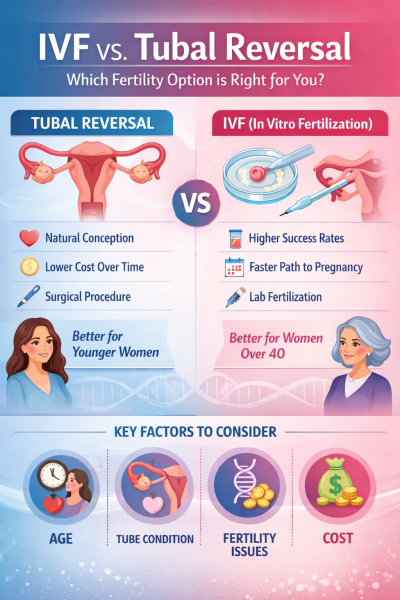
IVF vs Tubal Reversal
IVF vs. Tubal Reversal: Which Fertility Option Is Right for You?
For many women who previously had their fallopian tubes tied, the desire to have another child can return years later. Fortunately, modern reproductive medicine offers two main options to restore fertility: in vitro fertilization (IVF) and tubal reversal surgery. Understanding the differences between these treatments can help couples make the best decision based on their medical condition, age, and reproductive goals.
Understanding Tubal Ligation and Fertility
Tubal ligation, often called “having your tubes tied,” is a permanent form of birth control that blocks or cuts the fallopian tubes. This prevents the egg from meeting sperm and stops pregnancy from occurring.
However, life circumstances can change. Some women seek fertility again due to remarriage, loss of a child, or simply a renewed desire to expand their family. In these cases, fertility specialists may recommend either tubal reversal surgery or IVF treatment.
What Is Tubal Reversal Surgery?
Tubal reversal, also known as tubal reanastomosis, is a surgical procedure that reconnects the blocked or cut segments of the fallopian tubes. Once the tubes are successfully rejoined, eggs can travel through the tubes again, allowing natural conception.
Advantages of Tubal Reversal
Allows for natural conception
Possibility of multiple pregnancies without repeated treatment
Often more cost-effective over time
No need for laboratory fertilization procedures
Limitations of Tubal Reversal
Success depends on the type of previous tubal ligation
Less effective for women over 40
Requires surgery and recovery time
Risk of ectopic pregnancy
What Is IVF (In Vitro Fertilization)?
IVF is an assisted reproductive technology that bypasses the fallopian tubes completely. During IVF, eggs are retrieved from the ovaries, fertilized with sperm in a laboratory, and then the resulting embryo is transferred directly into the uterus.
Advantages of IVF
Works even if the fallopian tubes are severely damaged or removed
Higher success rates for women with additional fertility issues
Faster route to pregnancy in some cases
Controlled embryo selection
Limitations of IVF
Typically more expensive per cycle
Requires hormonal stimulation and multiple clinic visits
Some couples may need more than one cycle
Emotional and physical stress during treatment
Success Rates: Tubal Reversal vs IVF
Success rates vary depending on age, overall fertility health, and the condition of the fallopian tubes.
Women under 35 with healthy tubes often have high success rates after tubal reversal.
Women over 40 may experience higher success rates with IVF.
IVF success is often predictable because the fertilization process is monitored in the laboratory.
A fertility specialist usually recommends diagnostic testing before deciding which treatment offers the best chance of pregnancy.
Which Option Is Best for You?
Choosing between IVF and tubal reversal depends on several factors:
Age of the woman
Type of previous tubal ligation
Remaining length and health of the fallopian tubes
Presence of other fertility issues
Budget and personal preference
Desire for multiple pregnancies
For women who want the possibility of conceiving naturally more than once, tubal reversal may be appealing. For women who want a faster route to pregnancy or have additional fertility challenges, IVF may be the better option.
Final Thoughts
Both IVF and tubal reversal offer hope to women who previously believed pregnancy was no longer possible after tubal ligation. Advances in reproductive medicine continue to improve success rates and make these treatments safer and more accessible.
Consulting with a qualified fertility specialist is the most important step in determining which approach is right for you. With the right medical guidance and personalized care, many couples successfully achieve their dream of growing their family.