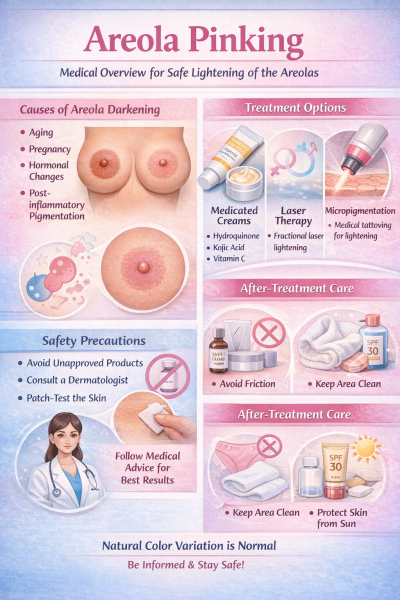
Making Areola Pink
Making Areola Pink cost £600 at Look Younger Clinic.
The color and appearance of the areola— the pigmented area surrounding the nipple— vary naturally among individuals. Some people may wish to lighten or restore a pink hue to their areolas due to aging, hormonal changes, post-pregnancy changes, or cosmetic preference. This essay explores the medical, cosmetic, and safety aspects of making areolas pink.
Anatomy and Physiology of the Areola
The areola is composed of:
Pigmented skin: Contains melanin, which determines natural color.
Montgomery glands: Sebaceous glands that secrete oils to protect the nipple and areola.
Vascular tissue: Responsible for pink or reddish undertones in some individuals.
The natural color of the areola ranges from light pink to dark brown, influenced by:
Genetics
Hormonal changes (puberty, pregnancy, menopause)
Age-related pigmentation
Sun exposure or skin trauma
Changes in color are often natural and not medically concerning.
Reasons for Wanting a Pink Areola
Post-pregnancy or breastfeeding – Pregnancy and lactation often darken areolas; some individuals wish to restore a lighter, pinker color.
Aging – Over time, melanin distribution can shift, causing darkening.
Hyperpigmentation disorders – Localized dark patches may occur due to inflammation or hormonal changes.
Cosmetic preference – Some individuals prefer a pinker, more uniform aesthetic appearance.
It is important to remember that areola pigmentation is normal and variable. Seeking color change is primarily a cosmetic choice.
Medical and Cosmetic Methods to Achieve a Pink Areola
1. Topical Agents
Lightening creams may be used in some cases to reduce hyperpigmentation. Active ingredients often include:
Hydroquinone (prescription-only, short-term)
Kojic acid
Vitamin C
Niacinamide
Medical note: Topical agents must be applied under the guidance of a dermatologist to avoid irritation, scarring, or uneven pigmentation.
2. Areola Micropigmentation (Medical Tattooing)
Also called areola tattooing or micropigmentation, this technique deposits pigment into the superficial dermis to achieve the desired pink color.
Commonly used for:
Post-mastectomy reconstruction
Cosmetic enhancement
Camouflaging scars or uneven pigmentation
Provides a long-lasting, customizable color but may require touch-ups over time.
3. Laser Therapy
Certain fractional laser treatments can help in lightening dark areolas by targeting melanin.
Must be performed by qualified dermatologists.
Risk of temporary redness, irritation, or hypopigmentation.
Multiple sessions may be needed.
Safety Considerations
Due to the sensitivity of the areola and nipple, medical oversight is crucial:
Avoid unregulated bleaching creams or home remedies.
Do not use strong chemical agents not designed for sensitive skin.
Ensure the skin is healthy (no infections, open wounds, eczema).
Patch testing is recommended before topical or laser treatments.
Psychological and Aesthetic Considerations
Desire for areola color change may stem from:
Body image preferences
Cultural or social beauty standards
Post-surgical or post-pregnancy changes
Healthcare providers should emphasize:
Natural variation is normal.
Cosmetic procedures are elective and should prioritize safety.
Realistic expectations and understanding of procedure limitations.
Aftercare Recommendations
After any cosmetic procedure on the areola:
Avoid friction, tight clothing, or nipple manipulation for a few days.
Keep the area clean and dry.
Apply prescribed healing creams if recommended.
Avoid sun exposure to prevent post-inflammatory hyperpigmentation.
Expected Outcomes
Gradual lightening over weeks for topical treatments.
Immediate visible results for micropigmentation, with minor adjustments later.
Permanent color restoration is not guaranteed; maintenance may be required.
Conclusion
Making the areola pink is a primarily cosmetic goal. Options include topical agents, micropigmentation, and laser therapy, each with its benefits and risks. Safety, medical supervision, and realistic expectations are paramount.
The most important takeaway is that areola color naturally varies widely. Any intervention should be carefully considered, ideally under the guidance of a qualified dermatologist or cosmetic surgeon.