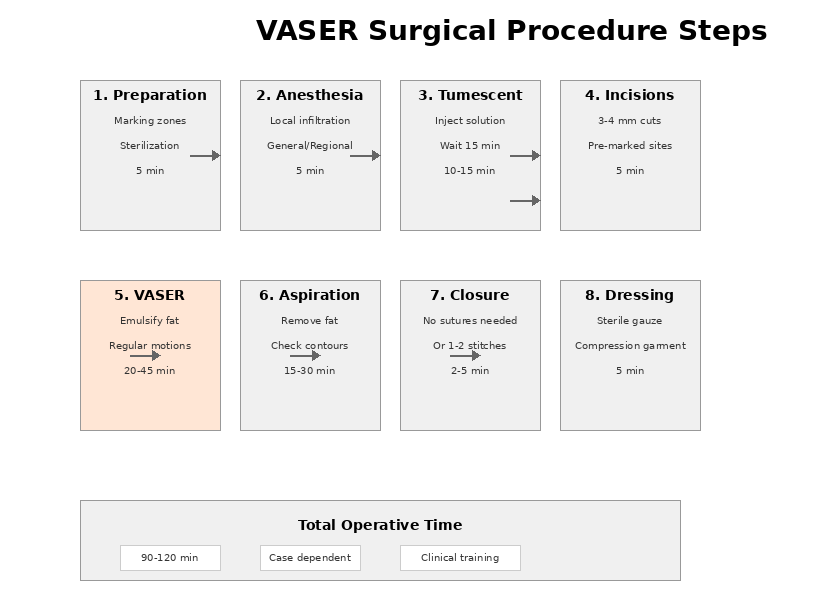
VASER Liposuction Training
VASER Liposuction Training workshop course.
our vaser liposuction course is hands one, one to one you will be doing all steps of procedure under supervision
course cost £3000
also there is basic course where you will observe the procedure done with lectures about it cost £1500.
VASER (Vibration Amplification of Sound Energy at Resonance) liposuction has revolutionized the field of body contouring and aesthetic surgery over the past two decades. Unlike traditional liposuction methods, VASER technology uses ultrasonic energy to selectively target and emulsify adipose tissue while preserving vital structures like nerves, blood vessels, and connective tissue. For surgeons and medical professionals seeking to expand their skill set and offer cutting-edge treatments to their patients, comprehensive VASER liposuction training is essential.
This guide explores what VASER training entails, why it matters, and how professionals can develop expertise in this transformative procedure.
Understanding VASER Technology
Before diving into training requirements, it’s important to understand the technology itself. VASER liposuction utilizes ultrasonic vibration at 36 kHz frequency to create a phenomenon called cavitation. This process selectively breaks down fat cell membranes while leaving surrounding tissues intact. The result is more precise fat removal, reduced tissue trauma, and faster recovery times compared to traditional liposuction methods.
The technology offers several advantages:
- Precision: Selective fat removal with minimal damage to surrounding structures
- Efficiency: Faster fat extraction and reduced operative time
- Safety: Lower risk of complications and reduced blood loss
- Aesthetic outcomes: Better skin retraction and smoother results
- Patient satisfaction: Minimal downtime and faster return to normal activities
Core Components of VASER Training Programs
1. Theoretical Foundation
Quality training programs begin with comprehensive classroom instruction covering:
- Anatomy and physiology: Detailed study of subcutaneous tissue layers, vascular anatomy, and neural pathways
- Physics of ultrasound: Understanding how ultrasonic energy works at a molecular level
- Device mechanics: Complete knowledge of equipment components, power settings, and maintenance
- Safety protocols: Contraindications, complications, and risk management
- Surgical principles: Pre-operative planning, patient selection, and post-operative care
2. Hands-On Laboratory Work
Practical training is critical and typically includes:
- Cadaver training: Working on anatomical specimens to understand tissue planes and practice proper probe techniques
- Simulation models: Using synthetic tissue models for safe, repetitive practice
- Equipment operation: Hands-on experience with ultrasonic consoles and various probe sizes
- Technique refinement: Learning proper probe angles, movement patterns, and power settings for different anatomical areas
3. Clinical Observation
Before performing procedures independently, trainees should:
- Observe experienced surgeons: Watching multiple cases performed by experts
- Understand decision-making: Learning how experienced surgeons adapt techniques for different patient types
- Note complications: Understanding how complications are prevented and managed
- Assess outcomes: Evaluating results and understanding what contributes to superior aesthetics
4. Supervised Live Surgery
This is where knowledge becomes practical skill:
- Graduated responsibility: Starting with minor roles (retraction, tumescent infiltration) and progressing to full procedure leadership
- Real-time feedback: Receiving immediate guidance from experienced surgeons during procedures
- Troubleshooting: Learning to solve problems as they arise in actual surgical scenarios
- Patient-specific variations: Understanding how body type, age, and tissue quality affect technique
Choosing the Right Training Program
When selecting a VASER training program, consider these factors:
Accreditation and Recognition
Look for programs recognized by professional organizations in aesthetic or plastic surgery. Accreditation ensures curriculum quality and instructor expertise.
Instructor Credentials
Trainers should have extensive experience performing VASER procedures and a track record of successful outcomes. Look for board certifications and publications in peer-reviewed journals.
Curriculum Comprehensiveness
Ensure the program covers all aspects mentioned above, not just equipment operation. A robust program spans 5-7 days minimum for introductory training.
Hands-On Ratio
The program should emphasize practical experience. Look for programs with low student-to-instructor ratios and multiple live surgery cases.
Post-Training Support
Quality programs provide ongoing mentorship, access to case consultations, and opportunities for continued learning.
Device-Specific Expertise
Ensure instructors are trained on the specific VASER system you’ll be using in your practice.
Key Areas of Focus During Training
Tumescent Infiltration Techniques
Proper tumescent solution administration is crucial for:
- Hemostasis (controlling bleeding)
- Patient comfort and safety
- Optimizing the ultrasonic effect on fat tissue
- Protecting vital structures
Probe Technique and Positioning
Trainees must master:
- Correct probe angles (typically 0-45 degrees to tissue plane)
- Appropriate probe pressure (gentle vs. firm application)
- Movement patterns (crosshatching and linear motions)
- When to use different probe sizes for various body areas
Anatomical Recognition
Deep understanding of:
- Superficial and deep fat compartments
- Vascular patterns in treatment areas
- Nerve locations to avoid
- Fascial layers and their importance in results
Patient Assessment and Selection
Learning to identify:
- Ideal candidates (good skin elasticity, appropriate weight)
- Contraindications (unrealistic expectations, medical conditions)
- Body contouring goals and communicating realistic outcomes
- Individual variations requiring technique modifications
Complication Recognition and Management
Training should address:
- Early signs of complications (seroma, hematoma, infection)
- Prevention strategies
- Immediate management protocols
- When to refer for additional care
Advanced Training Specializations
Once foundational VASER training is complete, professionals can pursue specialized applications:
High-Definition Liposuction
Creating sculpted, muscular-appearing contours through strategic fat removal revealing underlying musculature.
VASER Body Contouring
Comprehensive body transformation using VASER technology combined with fat transfer (BBL) techniques.
Facial and Neck Contouring
Smaller cannulas and refined techniques for delicate areas requiring precision.
Combination Procedures
Integrating VASER with other body sculpting techniques like surgical fat transfer or skin tightening.
The Investment in Professional Development
Quality VASER training requires significant investment in time and resources:
- Time commitment: 5-7 days for initial training, plus ongoing practice and mentorship
- Financial investment: Training programs typically range from $5,000-$25,000 depending on comprehensiveness
- Practice time: Hundreds of hours of supervised and independent practice to develop true expertise
- Equipment access: Investment in VASER system for your facility
However, this investment yields substantial returns through:
- Enhanced reputation and patient trust
- Ability to offer premium procedures with higher margins
- Patient satisfaction and positive reviews
- Reduced complication rates through proper technique
- Professional fulfillment and expanded practice offerings
Building Expertise Beyond Initial Training
Becoming truly proficient in VASER requires ongoing commitment:
Case Study Analysis
Regularly reviewing your own cases and those of mentors to understand what produces optimal outcomes.
Peer Consultation
Engaging with other trained surgeons to discuss challenging cases and share experiences.
Continuing Education
Attending refresher courses and workshops to stay current with technique refinements and technological advances.
Research and Literature
Reading peer-reviewed publications about VASER outcomes, complications, and technique innovations.
Mentorship Relationships
Maintaining contact with instructors for guidance as you develop your independent practice.
Conclusion
VASER liposuction training represents an important investment for aesthetic and plastic surgeons seeking to offer patients the most advanced body contouring solutions available. Quality training programs provide the theoretical knowledge, practical skills, and clinical judgment necessary to perform this procedure safely and effectively.
The demand for VASER liposuction continues to grow as patients increasingly seek less invasive body sculpting with minimal downtime. By pursuing comprehensive training and committing to ongoing professional development, surgeons can meet this demand while building thriving, profitable aesthetic practices.
The key to success is choosing quality training from experienced, credentialed instructors; dedicating the necessary time to hands-on practice; and maintaining a commitment to continuous improvement long after initial training concludes. For those willing to make this investment, VASER liposuction training opens doors to expand services, enhance patient outcomes, and achieve new levels of professional excellence.